
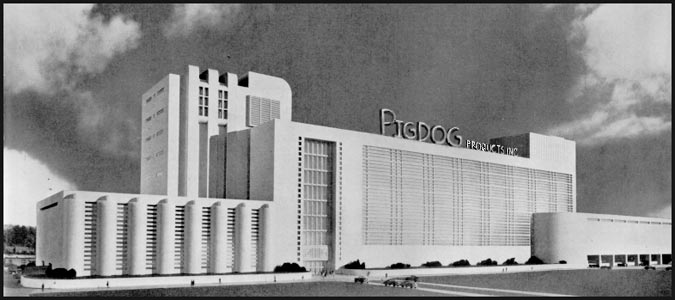
 One hundred thirty years ago, a young artist, Maximillian Zikevicius, became fascinated with the imaginative writings of Edgar Allen Poe, Jules Verne and later, H.G. Wells. Forming the company, Pigdog Productions, he devoted his life to publishing the magazine, Tomorrow Visions, and to his paintings of fantastic sceneries which were displayed in galleries in New York, Paris, and Barcelona. 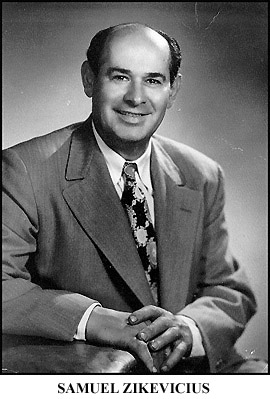 Maximillian’s son, Samuel, followed in his father’s footsteps as an artist and writer.
In the twenties Zikevicius traveled to Germany to consult as production designer on the
early silent German Expressionistic films. There he met such luminaries as Fritz Lang,
Vincent Korda, Leni Reichenstahl, Norman Bel Geddes, Raymond Loewy, Franz Kafka, and young
Alfred Hitchcock.
Maximillian’s son, Samuel, followed in his father’s footsteps as an artist and writer.
In the twenties Zikevicius traveled to Germany to consult as production designer on the
early silent German Expressionistic films. There he met such luminaries as Fritz Lang,
Vincent Korda, Leni Reichenstahl, Norman Bel Geddes, Raymond Loewy, Franz Kafka, and young
Alfred Hitchcock.
Taking his fortunes as a visualist, Zikevicius turned to the stock market in the mid thirties and wisely invested in manufacturing and metals. As the war in Europe spread, these investments grew into a fortune. Samuel’s children, Paul, Saul, Roz and Harry continued in the business and in 1946 Paul married Zelma. Zelma held a new, more modern view of the world that transformed Pigdog Productions into a global Atomic Age corporation.
In 1951 their son, Bruce Zick, was born and grew to be the heir apparent to the visionary zest
and zeal of great-grandfather Maximillian. After a rebellious detour during the sixties,
Bruce returned to the family empire where he has stayed to this day, directing the
creative endeavors of this world wide entertainment institution.
|